Showing posts with label Blues. Show all posts

Saturday, 26 November 2016

Eric Clapton's Slowhand: Album Review

BY AMIRY FAHMI


‘Slowhand’ is Eric Clapton’s 5th solo album, released on 25th November 1977 by RSO Records. Originally, the album only consists of nine songs, including two hit singles ‘Wonderful Tonight’ and ‘Lay Down Sally’, which reached various international music charts and were honored with numerous awards and recording accolades.
The name of the album was derived from Eric Clapton’s nickname, which was given to him by Giorgio Gomelsky – owner of Crawdaddy Club in London where The Rolling Stones, The Yardbirds regularly performed early on in their careers.
Later in 2012, the deluxe edition of this album was re-released and remastered that contained bonus tracks: a great version of ‘Alberta’, and previously unreleased tracks ‘Looking at the Rain’, ‘Greyhound Bus’, and ‘Stars, Strays, and Ashtrays’. These comprise Disc One of the set.  
Disc Two contained nine songs which were recorded live during Eric Clapton’s performance at London’s Hammersmith Odeon on April 27, 1977. These include riveting versions of ‘Tell the Truth’, ‘Knocking on Heaven’s Door’, ‘Nobody Knows You When You’re Down and Out’, ‘Stormy Monday’, ‘I Shot the Sheriff’, ‘Layla’ and many more.
All together this newer collection provides more than two hours of stellar music – a total of 22 tracks. Prior to the re-released of this album, the title of the album changed, ‘Slowhand 35th Anniversary’, to commemorate the 35 years of this magical album.
While listening to this album, I was star struck at how eclectic Eric Clapton is. His range of music can vary from country, to blues, to pop and to even rock music. This album contained all elements of these genres.
As a guitar player myself, songs like ‘The Core’, ‘Cocaine’, ‘We’re All The Way’, ‘Lay Down Sally’, ‘Mean Old Frisco’, and ‘May You Never’ makes you understand how Eric arranges his musical concept and how he puts it into the final product. For instance, ‘May You Never’ is one of the peculiar method of song-writing that Eric Clapton contributed. The song starts off with the chorus in the beginning, instead, of the usual musical flow – that is the verse first, and then the chorus.
Other examples we can observe, is Eric’s blues rendition over a 12-bar blues (just three chords played over 12 bars), in which the guitar sings in correlation with the singer exquisitely – more or less like a call-and-response.
Overall, should you listen to this album? My answer depends on your taste of music. If you are interested and have been curious about Eric Clapton, and have not heard of him before, then you should give it a try. It is an album crafted by a master in song-writing, guitar playing, coupled with a husky singer in pop, blues, country and rock music.

Apart from that, this is one of Eric Clapton’s commercially and critically successful studio albums. Everything is interesting, from the familiar songs to the newer releases and live materials. Hits like ‘Wonderful Tonight’, and ‘Lay Down Sally’ will definitely get you moving one way or the other. At least I did. Just sayin’. 

Saturday, 29 October 2016

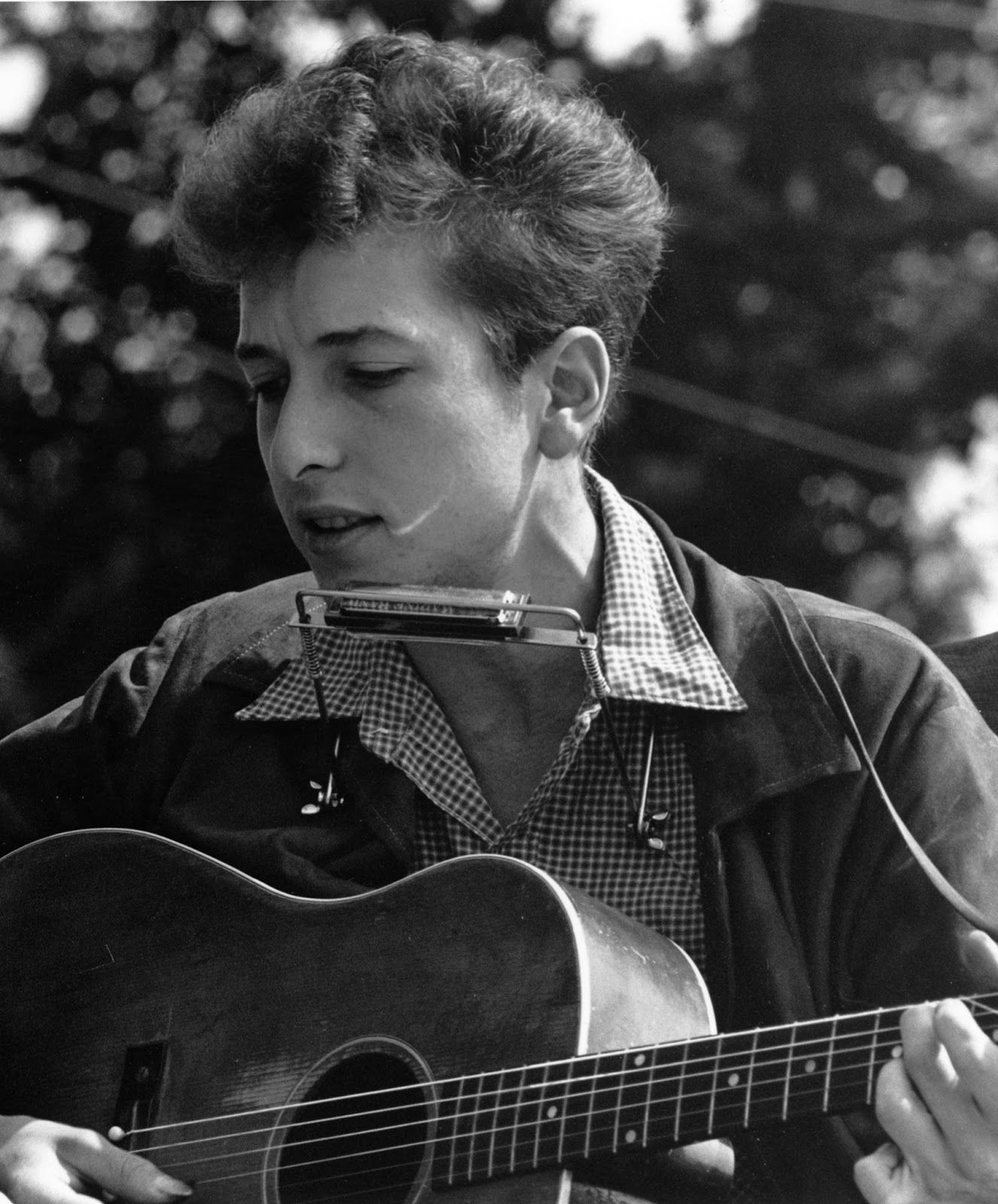
Bob Dylan's 'The Freewheelin' Bob Dylan': Album Review

BY AMIRY FAHMI


            Robert Allen Zimmerman, or famously known as Bob Dylan, is one the most profound singer-songwriters ever to have graced our musical history. His brash and powerful lyrics driven of politics, philosophy, social and literary influences, have captured us all in awe. Although his songs were written way back in the 1960s, 70s and 80s, yet these songs are still lingering around our mind and has had overpowering memories for us to share.
            His second album, which I was able to fully experience last night, entitled ‘The Freewheelin’ Bob Dylan’ was truly a remarkable listening experience.
            Written in 1962 and released in 1963 by Columbia Records, Dylan’s second album consisted of 13 songs – 12 were acoustic and harmonica sessions and 1 (Corina, Corina) was a full band ensemble. Whereas his self-titled debut album, Bob Dylan, had only contained two original songs, Freewheelin’ represented the beginning of Bob Dylan’s song writing brilliance – eleven out of the thirteen songs on the album are Dylan’s original compositions.
            The album starts off with one of the most important and moving song of all, ‘Blowin’ In the Wind’. In this song, we listen to Dylan asking rhetorical questions about peace, war and freedom. Dylan depicts the song as a sad anthem of desperation for freedom in humanity. He poses a list of hypothetical questions that are questions people may say but cannot be answered. Dylan does not claim to know the answers, but beautifully sing in the chorus that the answers are out there, ‘blowing in the wind’.
            Other politically driven songs that gained heavy attention is ‘Masters of War’. With its rugged acoustic rhythm guitar in the background, Dylan’s voice and lyrics is truly powerful and superficial. Masters of War is not only a protest towards the Vietnam War, but towards war in general. It demonstrates the real nature of war – the ‘masters’ who initiate and orchestrate the wars are safe in their homes, while normal (and usually young) people are forced to go out to fight and fear for their lives. The song also talks about how these ‘masters of cowards’ think that by having an enormous amount of power, they can outweigh death and can buy forgiveness with money. Is your money that good / Will it buy you forgiveness / I think you will find / When your death takes its toll / All the money you made / Will never buy back your soul.


Bob Dylan
            As the album mainly consists of political compositions such as ‘A Hard Rain’s A-Gonna Fall’ which Dylan articulates the anxieties of nuclear warfare during the Cuban Missile Crisis; ‘Oxford Town’ a song about the first black-American to enroll at the University of Mississippi; ‘Talkin’ World War III Blues’ where Dylan writes about his dream of World War III and his visit to the psychiatrist; and ‘Down the Highway’ where Dylan sings religiously about his fear of not being able to land a position in the gardens of heaven, we can also dive into Dylan’s love life and social experiences.
            For example, ‘Girl from the North Country’ is a song that Dylan sadly sings about his former lover, Echo Helstrom who was Dylan’s high school sweetheart. Dylan’s lovely, sad and husky voice blends in exquisitely with the soft guitar plucking in the background and daunting harmonica playing in between. If you’re travelin’ to the North Country fair / Where the winds hit heavy on the borderline / Remember me to one who lives there / She was once a true love of mine.
            Apart from that, ‘Bob Dylan’s Dream’ is a song that I was immensely connected to. Drifting away from the love and political compositions he had written, this particular song sets apart from the rest. It is a sad depiction of the separation of friendship we all go through. The depressing thought of not having the opportunity to relive those moments with the ones we love, and how we long to reunite with the ones we had spent happier times with.
            In conclusion, ‘The Freewheelin’ Bob Dylan’ is one powerful, sentimental and musically simple album. It did not require such complicated musical concepts – although blues arrangements such as 12-bar blues was constructed in ’Down the Highway’, and folk-blues chord arrangements can be heard in numerous songs in the album.    
            One thing to remember, was that Bob Dylan was only 21 years old when this album came out. For someone at that age to blatantly and bravely come out and sing tunes that invoke freedom, peace and love is something to respect for at a higher degree.

            His music might not be one’s cup of tea, yet his words will definitely move you one way or another. Like the African-American jazz producer who produced this album, Tom Wilson recalled: "I didn't even particularly like folk music. I'd been recording Sun Ra and Coltrane (Jazz musicians) and I thought folk music was for the dumb guys. [Dylan] played like the dumb guys, but then these words came out. I was flabbergasted."